How Zurich Won the World's Money
Zurich did not become one of the world's money capitals by accident. It was built on a railway financier's ambition, a hard currency, and a kind of trust that outlived even banking secrecy.
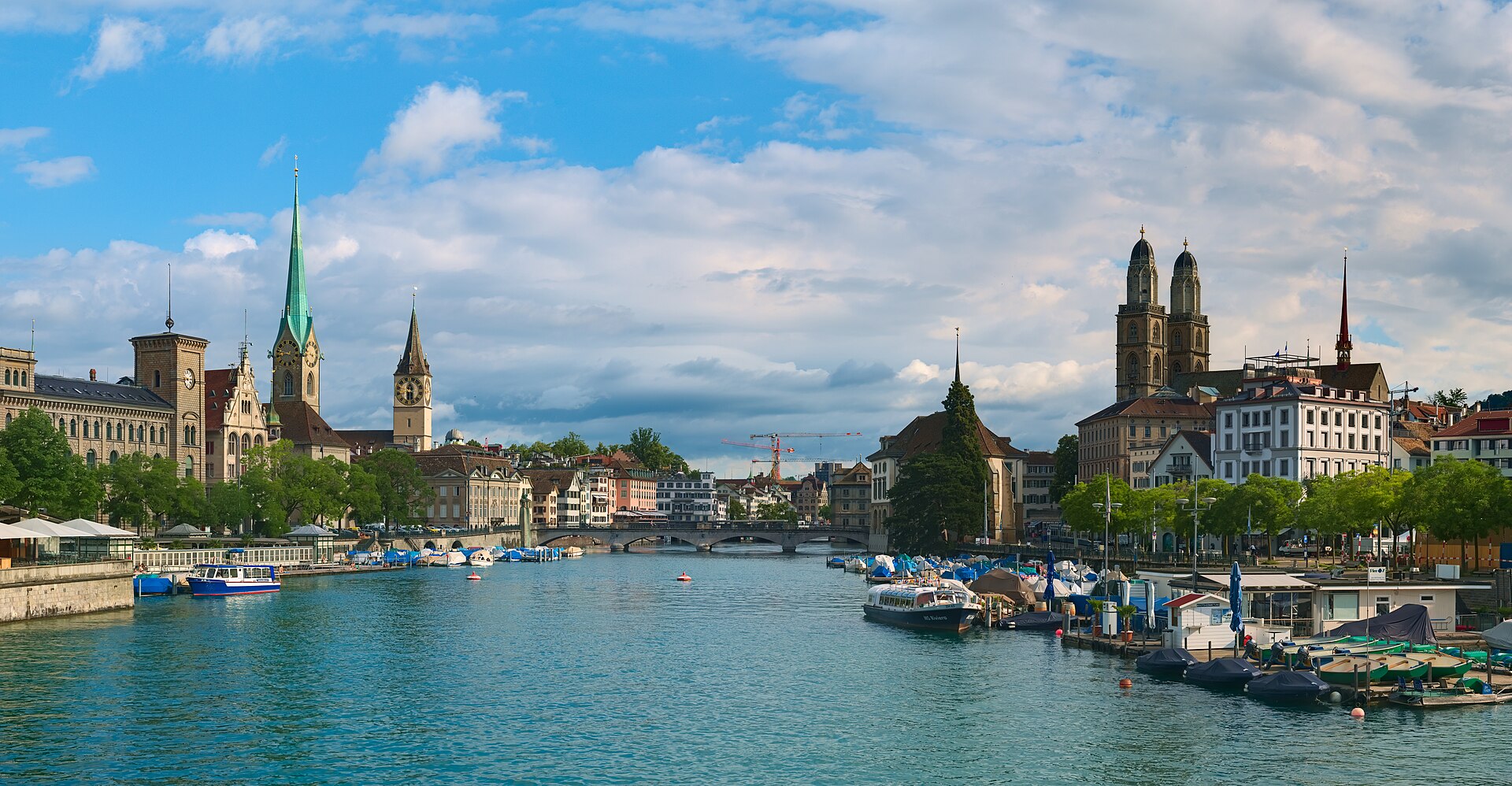
Zurich is a city of fewer than half a million people, on a lake, in a country smaller than the Netherlands. It is also one of the places the world’s money goes to feel safe. Pension funds, royal families, exporters and even other governments keep part of their wealth here.
That is not an accident of geography. It was built, piece by piece, over more than a century. And the strange part is that the thing most people think made Swiss banking famous, its secrecy, is mostly gone now. The money kept coming anyway.
It started with a railway
The modern story begins with one man and a train line. In 1856 a Zurich politician and businessman named Alfred Escher founded a bank, the Schweizerische Kreditanstalt, later known as Credit Suisse. He was not trying to build a financial empire. He needed money to lay railways across Switzerland, and he did not want to borrow it from foreign powers who might then control the country’s tracks. So he raised the capital at home.
The bank worked. The railways got built, and Zurich learned it could fund big things on its own. In 1876 the bank moved its headquarters to a square called Paradeplatz, designed by the same architect who built Zurich’s main station. To this day, Paradeplatz is shorthand for Swiss banking.
Staying out of Europe’s wars
The second ingredient was staying out of trouble. Switzerland has been neutral since 1815, and it sat out both world wars. While the rest of Europe burned through the twentieth century, Swiss banks kept the lights on. Money is nervous, and it runs toward calm. Every time a European crisis hit, some of the continent’s wealth crossed the border into Zurich and stayed.
Neutrality was not only about war. Switzerland’s political system is slow and decentralised, built on compromise and direct votes. Governments here do not swing wildly from one plan to the next. For anyone parking money for thirty years, that boredom is a selling point.
A franc you could trust
Then there is the currency. For most of the twentieth century the Swiss franc was backed by gold, by law, and Switzerland held onto that link long after other countries dropped it, finally leaving the gold standard only in 2000. The habit of hardness stuck. Over the past twenty years the franc has lost value at an average of well under one percent a year, far less than the dollar or the euro.
Add an independent central bank with a clean record on prices, the Swiss National Bank, founded in 1907, and a country that runs a steady surplus with the rest of the world. Put those together and you get a currency that rises when the world turns scary. The SNB’s chair, Martin Schlegel, has said as much: whenever there is uncertainty, the franc climbs. That is a rare problem to have.
The secret, and the gold
Zurich’s banks added two more tools. In 1934 Switzerland made it a crime for a banker to reveal a client’s details without consent. Banking secrecy turned discretion into law, and the world’s wealthy noticed. Around the same time, the big Zurich banks built a grip on the global gold trade. By the 1970s the city handled roughly 70 percent of the world’s gold, and Switzerland still refines most of it today. British politicians, irritated at all this quiet money power, coined a nickname in 1964 that stuck: the gnomes of Zurich.
Why the money still comes
Here is the twist. Banking secrecy, the thing most people believe is the heart of Swiss banking, is largely over. Under pressure from other countries, Switzerland agreed to share account information with foreign tax authorities. The system took effect in 2017, and from 2018 Swiss banks began automatically sending data on foreign clients’ accounts to their home governments. For anyone hiding money from the taxman, the game was up.
If secrecy had been the real foundation, the money should have fled. It did not. It stayed, because secrecy was never the main reason it was here. The real reasons are harder to copy. Courts that enforce a contract. Property rights that hold. A currency that keeps its value. A government that does not grab what it wants. Bankers who actually know how to look after large, complicated fortunes. Secrecy was the marketing. Trust was the product.
That is why Zurich still works, and why it should keep working even as its biggest bank argues about where to live. The city has just climbed into the world’s top 10 financial centres. Its strength does not sit in one bank or one law. It sits in a quiet promise the city has kept for more than a hundred years: give us your money, and it will still be here, and still be yours, when you come back for it. In a nervous world, that promise is worth more than ever.
Sources
- Alfred Escher: a visionary of modern Switzerland, aboutswitzerland (Swiss Federal DFAE)
- The history of the Swiss franc: from Napoleon to a global safe haven, b-sharpe
- What is Swiss banking secrecy and how has it changed?, IamExpat
- Zürich Gold Pool, Wikipedia
- Gnomes of Zürich, Wikipedia